
一般情報 General information
|
製品番号 Product No. |
Tanto-001. |
|
剣の種類 Sword type |
短刀 Tanto. |
|
銘 MEI |
無銘 直江志津(伝)無銘 MUMEI. Attributed to Naoe Shizu (Den). |
|
時代 Era |
南北朝時代 Nanbokuchô period, 1336-1392 |
|
日付 Date |
ca. 1375-1390 |
|
州 Province |
美濃 Mino |
|
伝 School |
直江志津伝 Naoe Shizu Den. |
|
師 Teacher/父Father |
未知 unknown |
|
|
|
|
|
寸法 Measurements
|
長さ Nagasa |
26.4 cm |
|
反り Sori |
0.10 cm |
|
元幅 Motohaba |
2.61 cm |
|
先幅 Sakihaba |
2.10 cm |
|
重ね Kasane |
0.54 cm |
|
茎 Nakago |
10.4 cm |
|
|
|
|
|
鑑定書 Kantei-sho
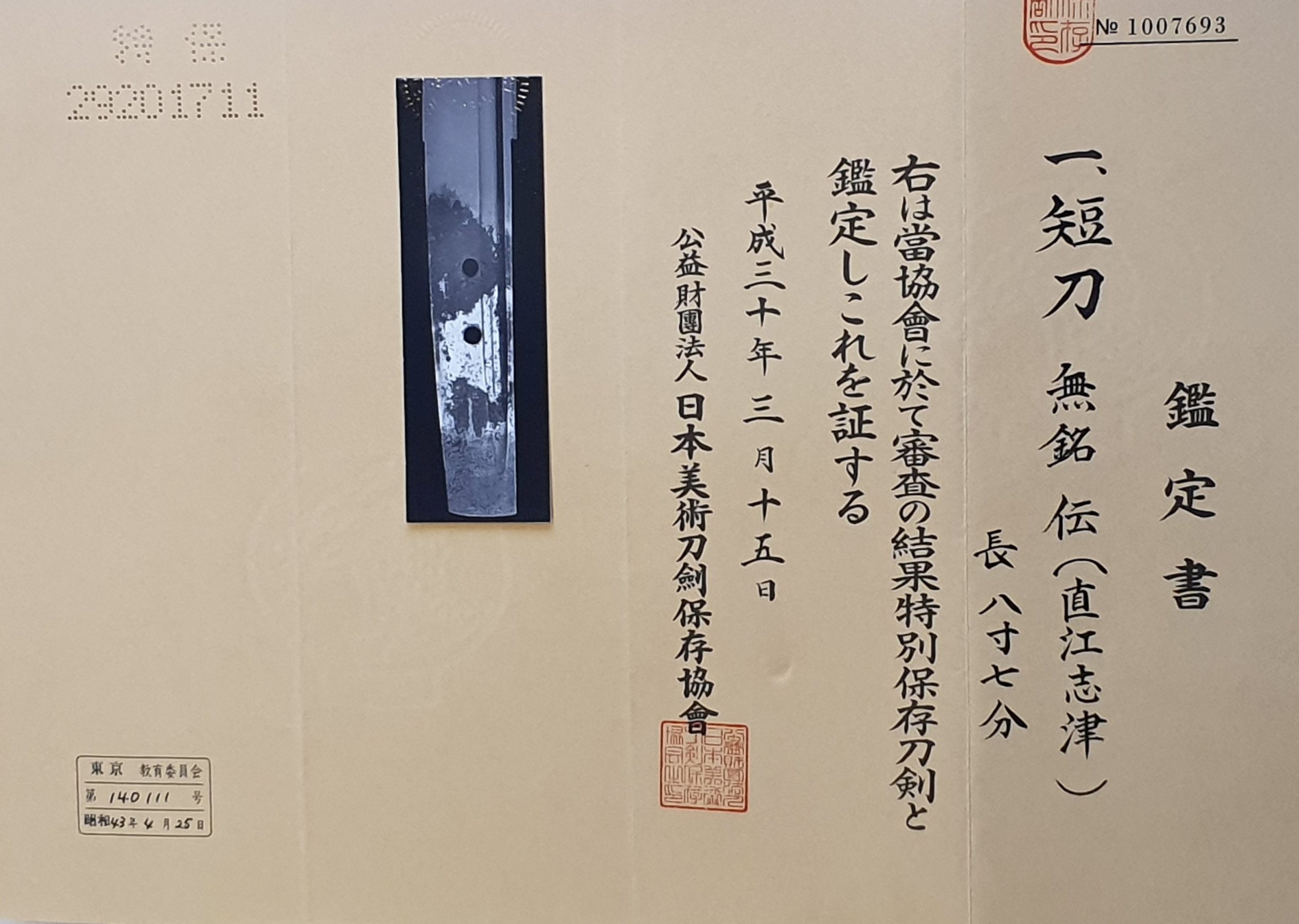
| 日本美術刀剣保存協会 NBTHK Certificate |
特別保存刀剣 Tokubetsu Hozon tōken |
| 他の証明書 Other certificate | 登録証明書 (Torokusho) Registration certificate present. 登録番号 Registration number: 140111 |
| 考課 Appraisal 鑑定 Kantei | 上々作 Jyo Jyo Saku |
| 状態 Status | 上等 Superior |
| 研磨 Polish | 平均研磨上記 above average polishing |
| 切れ味の分類 Classification on sharpness | 業物 Wazamono |
|
|
|
|
|
詳細 Details
|
姿 Sugata |
平造,庵棟 Hira-zukuri, Ihori-mune |
|
肌 Hada |
小板目(結構),柾目,地沸 ko-itame (Very fine),Masame, Ji, Nie |
|
切先 Kissaki |
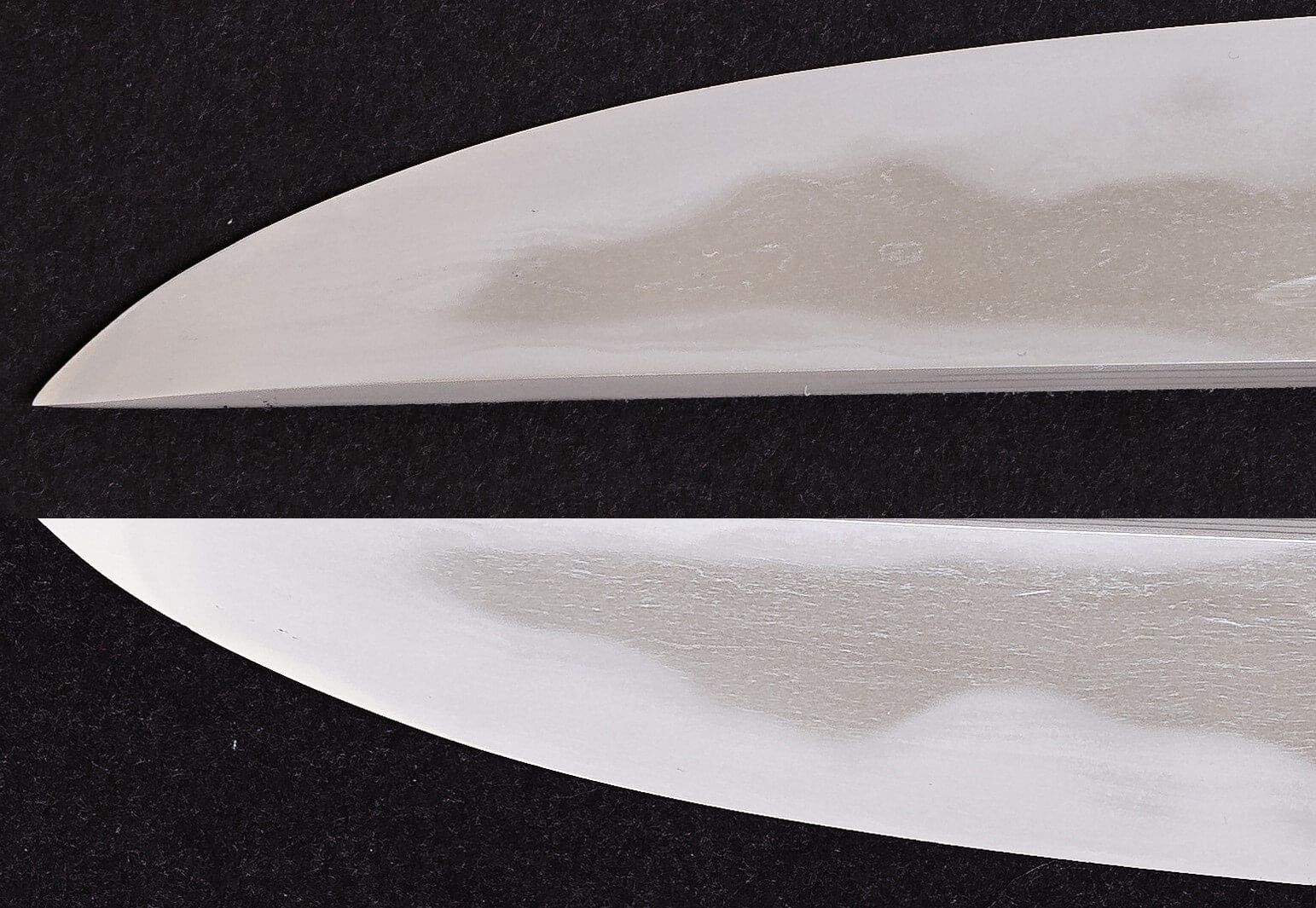
Go/Chu kissaki. small round shape and long Yakusage style. |
|
刃文 Hamon |
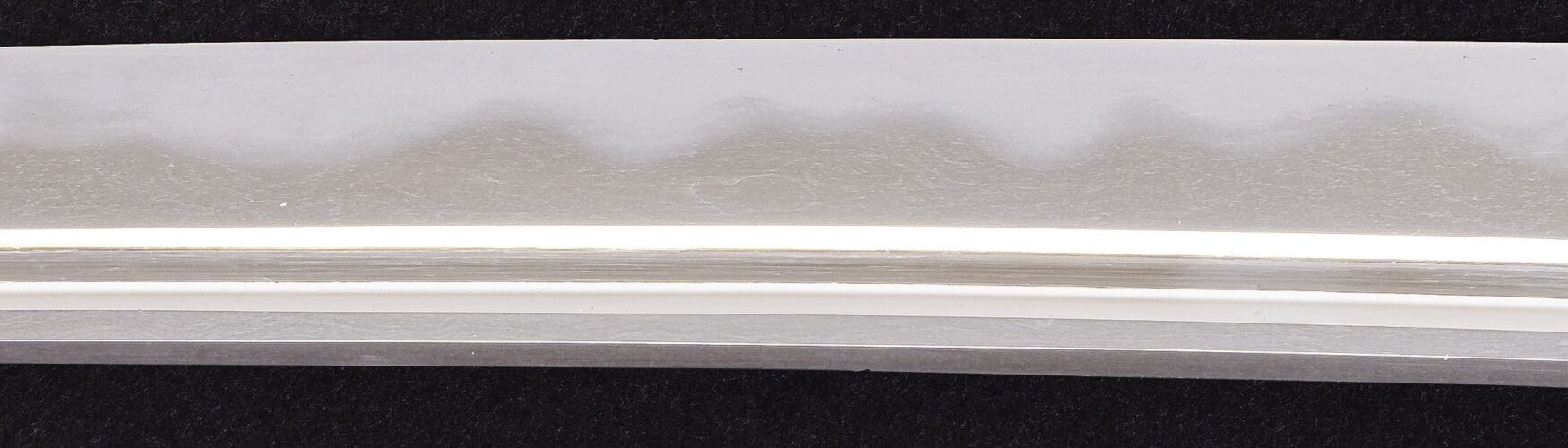
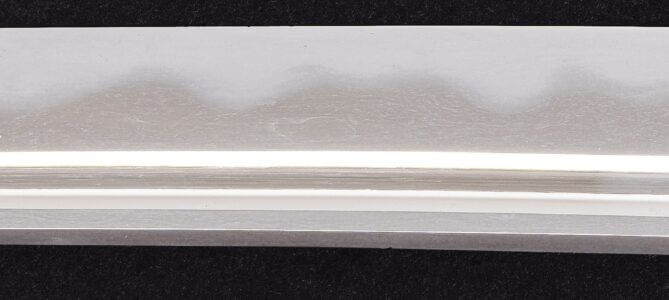
五の目乱れ,湾れ,匂い出来 Gumone-Midare, Notare, Nioi-Deki |
|
彫物 Horimone |
棒被 (両面) Bō hi (ryōmen) (Both-side) |
|
帽子 Bōshi |
返りる深く Kaeri-Fukashi |
|
中心 Nakago |
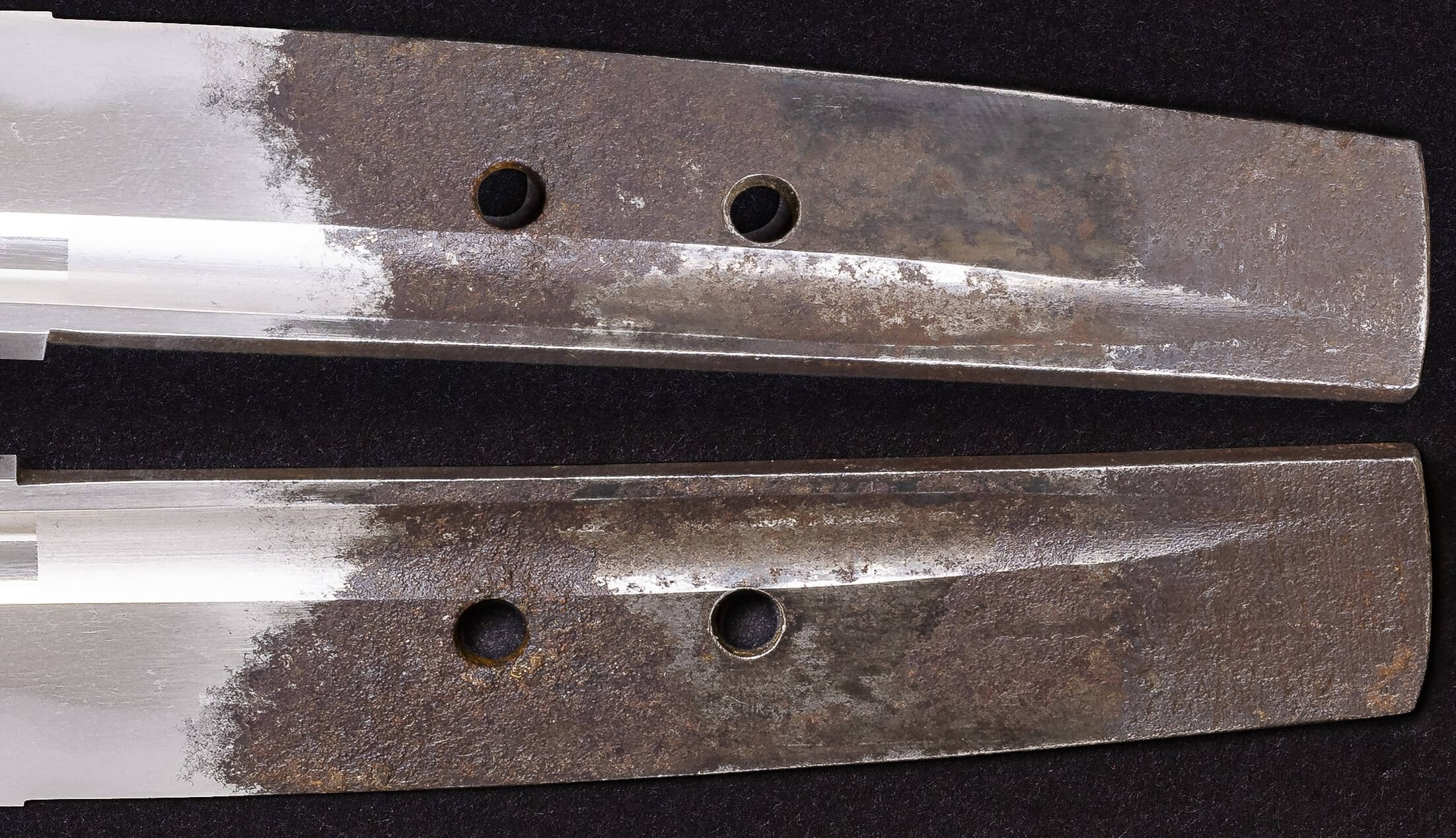
大擦上 Ō-suriage, yasurime, katte-sagari. |
|
目釘穴 Mekugi-ana |
二目釘孔 2 Mekugi-holes |
|
はばき Habaki |
Gold folded Habaki. |
|
|
|
|
|
|
|
外装 Koshirae |
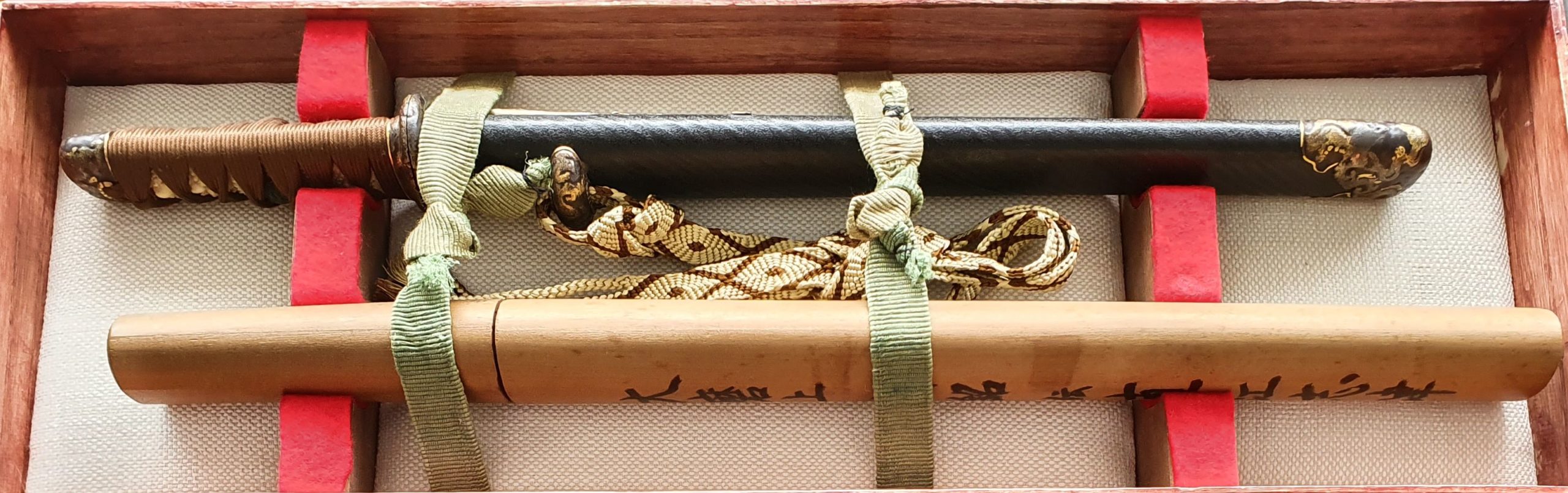
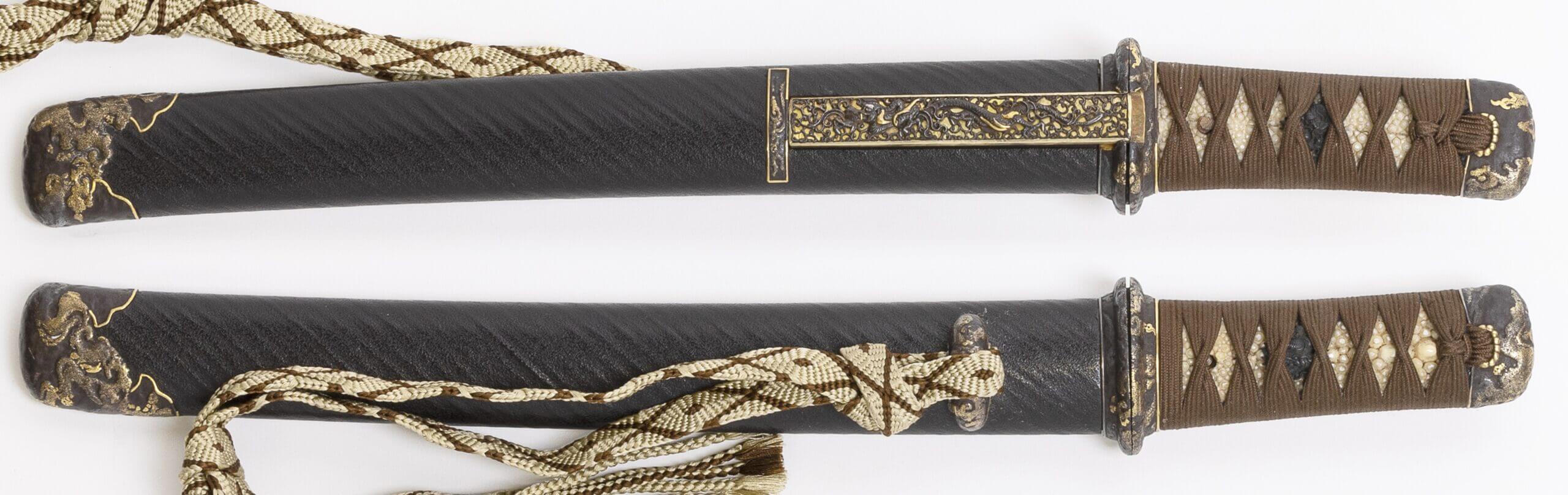
外装 Koshirae: 合口拵 Aikuchi style koshirae. 伝 School: Kumagai school (also called Higo style). 国 Country:江戸 Edo. 時代 Era: 中江戸時代 Middle Edo period. 小柄 Kozuka: 設計Design:Verry nice open-work style. 伝 School: 長崎 Nagasaki, Nanban. 国 Country: 肥前 Hizen-koku. 時代 Era: 中江戸時代 Middle Edo period. 小刀 Kogatana: 銘 MEI: 丹波守吉道 Tanba-no-kami Yoshimichi. (2nd gen. or later). 国 Country: 山城 Yamashiro. 伝 School: 吉道 Yoshimichi. 時代 Era: 中江戸時代 Middle Edo period. |
|
|
|
|
|
|
|
自鞘 Shira-saya |
The blade is polished and stored in a nice Shirasaya with a purple-coloured silk bag. |
|
|
|
|
|
|
|
鞘書 Sayagaki |
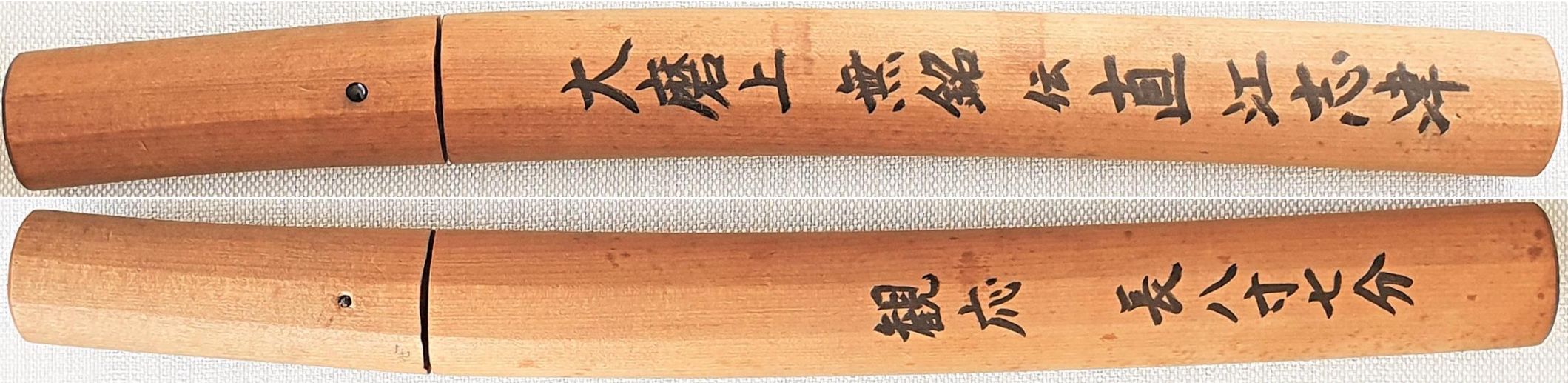
表 Omote: 大磨上 無銘 伝 (直江志津) O-suriage Mumei Den (Naoe Shizu) 裏 Ura: 観応 長八寸七分 Kano Hachi sun Shichi bu (Author of the Sayagaki is unknown) |
|
|
|
|
|
|
|
追加情報 Additional Information |
The judgment on the authentic as expressed in the description above was confirmed by “Nippon Bijutsu Tōken Hozon Kyokai” (NBTHK) issuing a 特別保存刀剣 Tokubetsu hozon tōken certificate: number 1007693 Provided on 平成三十年三月十五日 30th year in Heisei, 3th Month, 15th Day. 2018 年 3月15日 March. 15, 2018. This Tanto is a good example of Soshu Den style work from the middle Nanbokucho period. Personally, I think this Tanto can be attributed to a second generation Soshu Den blacksmith/ pupil. Good quality Soshu swords (this applies to all quality swords) is hard to find these days. Nihonto collectors are very fond of Soshu work, good Soshu works are always very exciting and dynamic. This tanto shows many features of Soshu Den, mainly reflected in the Shizu style hamon. I think this Tanto has a good, 重要 Juyo shinsa, (NBTHK) potential for the future: ATTENTION: this does require more background research. This Tanto is a great addition / step for anyone who wants to have a good Soshu sample, but can’t afford Juyo work yet. As for koshirae, it will easily get a Hozon certificate, I wouldn’t be surprised if it gets a Tokubetsu Hozon certificate either. Here is a challenge for the new owner. Overall a nice set of 日本刀 Nihonto and外装 koshirae stored in a varnish-lacquered 桐箱 Paulownia-box (Kiri). |
|
|
|
|
|
|
|
歴史 History |
The name of Naoe-shizu is the general term of the pupils of Shizu Saburo Kaneuji who was a one of Masamune 10 tetsu, (10 sword makers in Masamune-school). Shizu the First, Kaneuji was one of the most skillful swordsmiths of the Masamune School. And Kanetomo, Kanenobu and Kanetsugu were students of Kaneuji. They moved to Naoe from Shizu in Mino Province and started forging swords there. Some of his students gave it the name Naoe Shizu-on. That is, Kaneuji on and after the second generation, Kanetomo, Kanetsugu, Kanenobu and so on are seemed to correspond to Naoe-Shizu. The (直江志津派) Naoe shizu school was a Japanese sword school founded by some pupils of Shizu Saburo Kaneeuzi (志津三郎兼氏). The Naoe village (直江村), which was a village in the northern part of Shizu. In the Mino province (美濃). Famous swordsmiths from the Naoe shizu school are: Kanetomo (兼友) Kanetsugu (兼次) Kanetoshi (兼俊) Kanetoshi (兼利) Kanetsugu (兼次) Kaneuji (兼氏) Kanenobu (兼信) Kanenobu (兼延) Most Naoe Shizu group swords are (unfortunately) are Suriage, O-Suriage cut down, with lost or MEI/signatures as a result. |
価格 Price € 13750,– (Shipping fee is not included in the price).
PS: More photos available on request!