一般情報 General information
| 製品番号 Product No. | TS-19. |
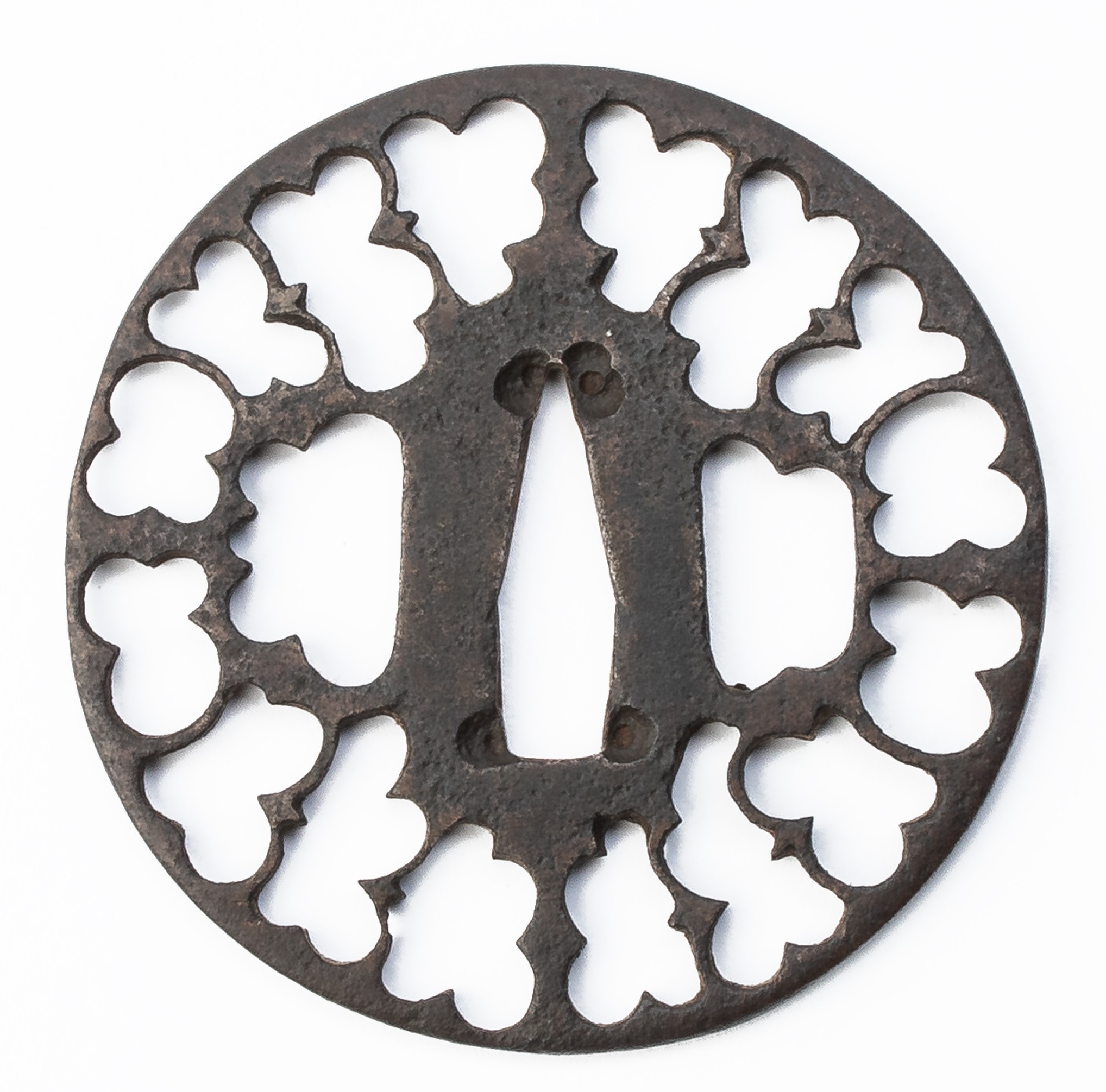
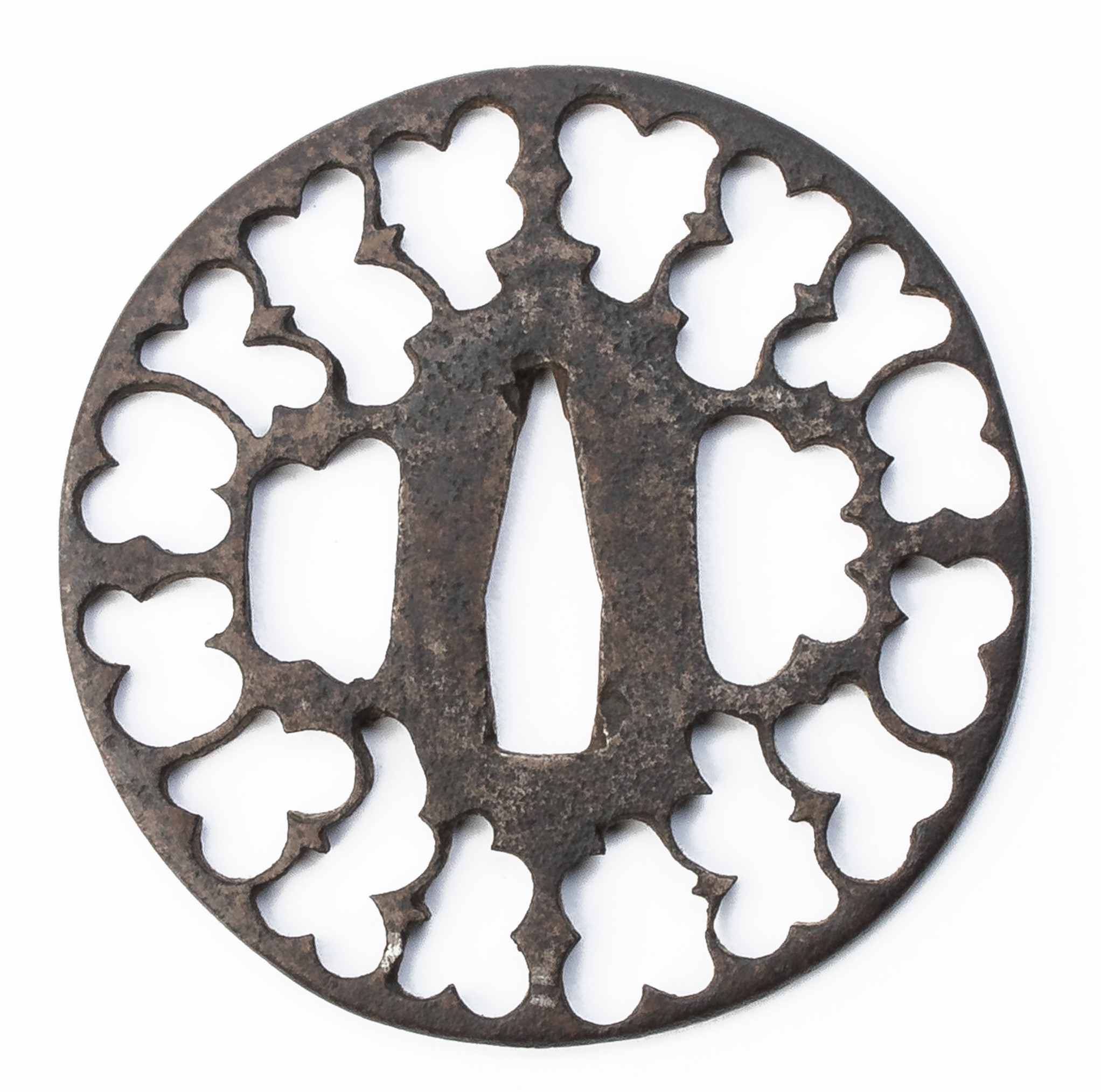
| 剣の種類 Sword type | 透かし鍔 Sukashi Tsuba |
| 銘 MEI (表 Omote) | 無銘 MUMEI. |
| 形状 Shape. | 丸形透 Maru gata sukashi. Shimizu Jingo. |
| 画像 Image. | 雁繋ぎ透かし Wilde Gans Watermerk |
| 時代 Era | 江戸時代 Mid Edō period. |
| 日付 Date | ca.1720-1760 |
| 伝 Den/School | 尾張透かし伝 Owari Sukashi Den |
寸法 Measurements
| 身長 Height | 74.1 mm |
| 幅 Width | 73.5 mm |
| 厚さ Thickness | 4.50 mm |
| 重さ Weigth | 51 gr. |
詳細書 Details
| 物質 Material | 鉄地に Iron base |
| 技法 Technique | 透かし彫り技法 Openwork technique |
鑑定書 Kantei-sho
| 日本美術刀剣保存協会 NBTHK Certificate | 適用外です Not applicable
保存東宗具,しんさの候補 Candidate for Hozon Tōsō-gu Shinsa exam |
| 他の 証明書 Other certificate | 適用外です Not applicable |
| 状態 Status | 上工 Jōkō Superior |
| 追加情報 Additional Information | This type of pierced Tsuba was very popular in Kyoto in the early Edo period. Kyō Sukashi tsuba were named after Kyōto which was at one time the capital city of Japan. It was adopted by the Owari Sukashi school, but the Owari examples tended to use a more thicker plate.
When the design was approved by the Akasada school of Edo, it was distinguished by this thicker plate. The most common motifs for this type of Tsuba are described as: Myōga Kari Kai Zu 茗 荷 雁 繋 図 and sometimes contain Karigane wilde 金 (wild geese), Myōga 茗 荷 (Japanese ginger) and Fundo 分 銅 (Japanese weights). During this period, these three items were the elegant elements of the classic designs. |
| 歴史 History | 適用外です Not applicable |
価格 price € 775,– (Shipping fee is not included in the price).
PS: More photos available on request!